Your Trusted Digital Marketing Agency

Author: Chris Wood

Retailers! Increase Xmas Sales with our Top Tips

If you’re an online retailer, you should be pulling out all the stops to maximise Christmas sales this year. With shoppers being warned to buy early this year due to supply chain issues and uncertainty around Covid, demand is likely to be high this October and November, as well as in December. It’s probably too late to increase your organic presence in time for Christmas (make SEO your new year mission!), but there are other ways to get relevant website visits, and hopefully sales, before the last Christmas postal date. Here’s our top five tips to increase Xmas sales.

1. Set up and Optimise Google Shopping

If you have products to sell you need to set up Google Shopping Ads! They’re ideal for showcasing your products and making it easy for people to buy. Make sure you fill in website product info, scan search queries and add negative keywords and check your pay per click rate. For more on Google Shopping read our previous blog post.

2. Stay Top of People’s Minds with Remarketing

People do a lot of browsing leading up to Christmas, looking for the ideal gifts. If you want to make sure people are reminded of your products, remarketing is a powerful tool. Remarketing works by retargeting your website customers with adverts about your business as they browse the web. Don’t let them forget your website! You can set up remarketing ads in Google, Facebook, Instagram and Twitter. Use with care and skill in order to save yourself from costly mistakes!

3. Increase your Budget

This might sound obvious, but if you’re already running Google Ad and social media campaigns it is worth upping your spend over the Christmas period to increase your sales. If your ads are effective, the more you spend, the more sales you should have. Don’t forget to make sure you have enough stock to deal with an increase in sales!

4.  Email Marketing

Do you have an email marketing list? If so make sure you use your enewsletter to push your popular products, explaining their key features and benefits. Make sure you send an e-shot regarding last postage days early, so your customers don’t miss out.

5. Review your Settings

Finally, make sure your budget isn’t being wasted by reviewing the setup of your Ad campaigns. Review your location settings, bids and search queries. By knocking out irrelevant keywords used when people search for your products, you can really help to minimise wasted clicks and get the maximum return on your budget.

We hope you found these tips on how to increase xmas sales helpful, and we wish you a busy trading period in the run up to Christmas. For help with managing and boosting your advertising campaigns, get in touch.

Apple iOS 14 Facebook Ads

How the Apple iOS 14 update will affect your Facebook adverts and what you can do instead

If you run Facebook ads for your business, you will probably have heard about the Apple iOS 14 release that is starting to affect your adverts and reporting. So what exactly does the update mean for Facebook advertisers?

Every year Apple rolls out a big update to the iOS software that runs on eligible iPhones (some older versions won’t support the latest updates). With this latest update, iPhone users will get a prompt to ask if their downloaded apps have permission to track them across other apps and websites. When people choose not to be tracked by Facebook this will impact how Facebook receives and processes conversion events such as the Facebook pixel. In a nutshell, if you use Facebook to advertise your business, you will no longer be able to re-target those that have visited your website if they opt out of tracking on their iPhone (79.9% of worldwide Facebook users use their mobile). This will mean that website visitor audiences will become smaller and so there is less people to re-target. Other targeting options will also be weakened as Facebook is not able to track user behaviour.   

This update will have a big impact on small businesses that advertise on Facebook, as smaller businesses generally have lower budgets, meaning they need as many options for targeting as possible.

What options do small businesses have now for Facebook ads targeting?  

  1. Use conversions API tracking. This is a Facebook Business tool that allows businesses to share key website and offline events directly from their own server to Facebook’s. Conversions API actually works in parallel with the Facebook pixel, which as mentioned above is greatly affected by the update, so this option won’t pick up every interaction, but it will pick up some.
  2. Test different audiences. As we know testing is key when it comes to digital marketing and there are other options available on Facebook to target people who interact with your business. As website audiences will now become smaller, one of the best alternative audiences that we would recommend testing is a custom audience from page engagements, which targets people that have engaged with your Facebook page. If you don’t have a good amount of engagement on your Facebook page, another good option is to target your competitors’ audience, which will show your ads to people that have liked a page or expressed an interest in pages relating to your competitors. You can do this at ad set level by typing your competitor’s name into the detailed targeting section. If their name doesn’t come up, you can play around with phrases that relate to that competitor and their services or products. Here’s a great blog that we’ve found explaining this in more detail.    
  3. Use Lookalike Audiences. You can target profiles similar to your website visitors and/or those that engage with your Facebook page. These audiences can work really well as you are reaching people who are likely to be interested in your business as they are similar to your existing customers. Here’s Facebook’s guide to creating Lookalike Audiences.  
  4. Run video ads. There are lots of great reasons to run video ads, ranging from viewers stating that they retain 95% of a message when they obtained it by watching a video (source: Social Media Week), to 93% of brands claiming that they got a new customer because of a video on social media (source: Animoto Blog). But it doesn’t stop there. If you have the resources to create a quality video, we recommend running a Facebook video ad. Once your ad has received some decent engagement you can then set up an additional advert to target those people that engaged with the first video, helping you to get in front of people that are likely to buy from you. The great thing about this is that you can use your video in other places such as your website or perhaps your YouTube channel.         
Simple tips to improve your Facebook ads

We hope you found this information helpful and we just wanted to end this blog with a few very simple tips to hopefully help you even further.

Simple tips for helping your Facebook adverts to stand out     

  1. Choose quality images or videos that will stop someone in their tracks. Social media users scroll through their updates very quickly, so stop and think, would this visual jump out to your audience in a crowded newsfeed?
  2. Have you given your audiences everything they need to take action? Check your set up carefully, have you chosen the right action button such as ‘buy now’ or ‘learn more’ and does the copy cover everything they need to know? If someone feels that they have to go somewhere else to look for additional information they will likely scroll right by.
  3. Remember it’s not about you. As a business owner it can be very tempting to talk about how amazing your business is, but you must remember that it is all about your audience. How is your product or service going to solve a pain point, entertain them or make them happy? If you can truly convey this in your adverts you will stand out on Facebook. Many business owners can find it hard to create their own adverts for this very reason and if you think you think you could benefit from an agency writing your adverts for you then please take a look at our services.  

If you are already seeing great results from Facebook advertising for your small business, or even if you are just starting out, we understand how these changes can feel daunting. If you need any help with managing or setting up your Facebook advertising please get in touch and our friendly team of experts will help you to navigate around this update in the best way for your business.

digital marketing manager

Introducing our new Digital Marketing Manager at Q Social Media

Hi, I’m Jessica and I’m really pleased to have joined the team at Q Social Media as a Digital Marketing Manager.

Writing this blog has been on my ‘to do’ list since I started at Q Social Media (QSM), as a way to introduce myself to clients. It’s been so busy though that I’ve already been in this role for three months (wow – time has flown by). I actually met Chris 9 years ago when I attended a social media and search engine optimisation course that he was running. I remember really enjoying the course and learning a lot from it, so it’s great to now be working with him all these years later. I’ve gotten to know some lovely clients so far and I’m enjoying working with Chris and Marie and combining our digital marketing skills to deliver the best possible service to QSM’s clients.

What does my role involve?  

Online advertising

A big part of my role is creating and managing online adverts for clients, this includes Facebook, Instagram, Google Ads, Bing Ads, Amazon and Twitter. I really enjoy the process of doing keyword research, writing strong copy for adverts, choosing images and setting up the campaigns to get in front of their ideal audiences (or targeting past website visitors). I regularly monitor online adverts and adapt them when needed including adding negative keywords to Google Ads, Bing and Amazon Ads. It’s great to see the results that we get for clients and we use the analytics to make any improvements.

Blogging

I absolutely love writing, especially blog writing. It’s a fantastic way for clients to deliver value to their audience and a really authentic way to help with search engine optimisation (SEO) and to help increase website traffic. I particularly enjoy the challenge of seamlessly adding keywords throughout the blog copy itself, which search engines rank very highly. It’s very rewarding to see the results that blogging is getting for clients so far. A blog that I created a couple of months ago for one client has helped to improve the positions of some important keywords, including one which has just moved up 11 places in Google search results, which is fantastic. 

Search Engine Optimisation (SEO)

I combine the work that I do ‘on page’ such as blogging or writing website content together with SEO in the back end of websites, ensuring that I create meta descriptions that stand out in search engine results and that the best keywords are chosen in relation to the content, as well as linking to other relevant websites and back to their own website.

digital marketing manager

Website content and audits

Quality website content is so important and my role involves writing SEO friendly website content as well as carrying out audits to offer suggestions for improvement. This could include adapting menus, grouping products differently or adding calls to action or more information to a page.

Design

Often clients need design work carried out and it’s a fun part of my role. I create visuals mainly for Google display adverts, either to target people who are browsing similar websites or re-targeting their previous website visitors to entice them to re-visit that particular page.

Reporting

An important aspect of my role is reporting on online advertising, website statistics and any changes in keyword positions, so that the client is kept up to date on the results of our work and of course we can use this to make any changes or to help plan new campaigns.  

Why I love digital marketing and why you should too

  1. You have the opportunity to really stand out. It may seem like every brand and company is on social media or that everyone is competing for first page search engine rankings, but it doesn’t mean that everyone’s doing it well. If you provide value to your audience and put your audience first, whether that’s creating meaningful blogs and social media posts, having a website that’s easy to navigate with all the information readily available, or creating great online adverts, you will begin to stand out against your competitors. 
  2. You are in control of your advertising. You could spend a lot of money to put an advert in a printed magazine in the hope that it will get in front of the right people (and of course that can work). But if you are looking for an affordable way to reach your target audience, then online advertising is the way to do it. You pick the platform, you choose your audience, you set your budget and that way you have greater chance of getting a good return on ad spend.
  3. You can really get to know your audience and add to the customer experience. Digital marketing is fantastic for understanding your audience, so you can tailor future content to them. I really love that you can make digital marketing part of the customer experience, by interacting with your customers online, asking them questions, providing content that they enjoy, answering customer service quires and just overall showing that you care. 
  4. It’s measurable and adaptable. The great thing about digital marketing is that you can measure everything. You can easily see your return on ad spend, understand what drove people to your website, see what content is doing well on social media and it’s all easily adaptable if you ever need to make any changes.
  5. Online content is shareable. This is why it’s crucial to create the best online content that you can, because if you provide value to your audience, whether that’s solving a pain point or creating content that they care about, then they will want to share it with others, and you have the opportunity to get your business in front of even more people.    

With all of the above in mind it’s important that what you are putting out online is quality content that makes it as easy as possible for the audience to take action. Please remember that while it is possible to produce quick results with online advertising, great digital marketing is something that takes time to build, and if you put in the time and effort it will become an asset to your business.

If you need help with any aspect of your digital marketing, whether that’s a Google Ads audit with recommendations for improvement, some extra support to complement your own in-house team or full management please contact Q Social Media on 01392 311340 or email marketing@qsocialmedia.co.uk

online sales

How to Improve Online Sales Using Social Media

If you have an online shop, the question of how to improve your online sales is never far from your thoughts. As well as working out how to reach your target audience, strengthen your USP and improve your sales funnel, there’s the problem of cart abandonment. World shopping cart abandonment rates for retailers in March 2020 were 88.05% .

If your cart abandonment could be improved by even 5% it could make a big difference to your sales. Social media is an invaluable tool for online retailers. Below we’ve included our tips on how to use it to help improve your online sales.

Plan Your Social Media Content

Your brand is probably already using social media, but are you planning your content? Make sure you are using social media to raise awareness of your brand and products. Don’t just taking the hard sell approach.

Plan your posts carefully, particularly in the lead up to key seasonal sales periods. Highlight your popular products: mention their key features, benefits and endorsements. To avoid disappointment don’t forget to keep your customers well informed across all of your social media platforms regarding the last postage days for last minute orders.

To find out more, check out our social media content ideas for businesses here.

How to Improve Online Sales Using Social Media

Build Trust on Social Media

As well as raising awareness of your brand and products, use social media to build trust. If you want people to hand over credit card information on your website, your brand must feel authentic and trustworthy. People will often head over to social media to see what people are saying about your brand before buying. Make sure your social media accounts are linked to your website. You also need to build in a strategy for customer engagement and loyalty. Peer to peer reviews are becoming the main source of brand advocacy, so ensure you are doing everything you can to encourage good reviews and feedback. This will help to build trust with your target market.

Optimise Social Media Advertising

Social Media advertising is a great way to reach beyond your existing audience and increase web visitors and sales. You can do detailed targeting on both Twitter and Facebook/Instagram. For example, narrowing down your audience by location, age, interests and job titles. If you already run ad campaigns it is worth reviewing the setup of your Ad campaigns to avoid wasting money. Optimise your settings to pay by Ad clicks rather than Ad views and ensure the set-up matches your target audience. Location targeting should be set up correctly to concentrate your efforts where your products sell best, particularly if you have a limited budget.

How to Improve Online Sales Using Social Media

Use Remarketing to Bring Back Potential Customers

To reach out to people who visited your site and left before completing a target activity (e.g. completing a purchase or filling out a contact form), it’s possible to target them using remarketing ads. These are image based ads which can be set up on Facebook, Instagram or Twitter. They work by appearing to customers who have visited your website as they browse the web. Since you only pay each time someone clicks on your ad they’re a great way to remind people of your business whilst they are still in the decision making process. Facebook also has a big advantage over Google when it comes to remarketing, since there is no minimum audience required before your ads kick in.

For High-Level Targeting Try Dynamic Ads

Even more targeted than remarketing are dynamic ads. If someone abandons their cart mid sale whilst logged into Facebook, it’s possible to target them with an ad showing the exact product they were looking at, reminding them to finish their purchase. You can even offer a discount code or free shipping to tempt them back. This is a highly effective way of increasing conversion rates and bringing back customers. Maybe they left your site to compare product shipping times or prices with another provider and then forgot who you were!

Promote Flash Sales

If you have a glut of products at the end of a season or line, a flash sale is a great way to shift them quickly. Social media is the ideal way to quickly share your sale. Create a Facebook offer and share using audience targeting. Base this on location and interests or behaviours (e.g. people who have interacted with your Facebook page recently).

How to Improve Online Sales Using Social Media

We hope you found these tips on how to use social media to improve your online sales helpful. We specialise in helping online retailers increase their revenue, so get in touch to find out how we can help.

Top Tips to Increase Website Traffic in 2021

Top Tips to Increase Website Traffic in 2021

Would you like to improve your digital marketing in 2021 to increase website visitors and sales? Here are some top tips to help you review, update and optimise your current digital marketing channels.

1. Make your website visible with SEO

Make your web pages more visible to search engines and help them appear higher up in the organic search results by improving your Search Engine Optimisation. Alongside well planned website text, getting meta title & descriptions right is important in getting those all important click-throughs to your website.

Firstly, carry out some keyword analysis. Use Google’s keyword planner to find out which keywords are most relevant to your business and which are searched for the most. You can then use this information to review and update your website content (making sure copy is still readable and flows well) and the meta data fields and alt text on your site. It might be that the keyword analysis has informed you that there could be new pages to introduce too.

If your website has a lot of pages and you’re not sure where to start, you could check in Analytics for your most visited pages. Head to Behaviour – Site Content – Landing Pages and then All Pages.

Top Tips to Improve Website Traffic SEO Keyword Analysis

2. Drive traffic to key products with Google Ads

If you’re not currently running Google Ads it is worth considering setting up a campaign to promote your key products or services and increase web visitors and customers. Make sure you pay attention to locations, ad text, keywords and negative keywords. If you’re an ecommerce business Google Shopping is essential for any online retailers who want to increase sales.

If you’re running Google Ads already, review & update your Ad text and negative keywords and check your settings, keywords, bids and search queries. This will help you get the best ROI for your ad spend. If you need help get in touch.

3. Target new audiences with Social Media Ads

Social media ads show to people who may potentially be interested in your product or service, so they’re a good way to complement Google Ads which show to people who are already searching for your product.

Facebook advertising is a great way to reach beyond your existing audience and increase web visitors and sales. You can do detailed targeting on Facebook, narrowing down your audience by location, age, interests and job titles. Facebook’s Custom Audiences also allow you to target people who interact with your brand already. For example, you can reach out to people who visited certain web pages on your site, used your app, interacted with your Facebook page or even visited your business. You can target Instagram through Facebook Ad Manager too which is great for visual brands.

If you already have social media ads set up, regularly review and update them. Make sure images, ad text, landing pages and location targeting is reviewed to make sure it’s relevant to the current situation and customer needs.

4. Review your email marketing strategy

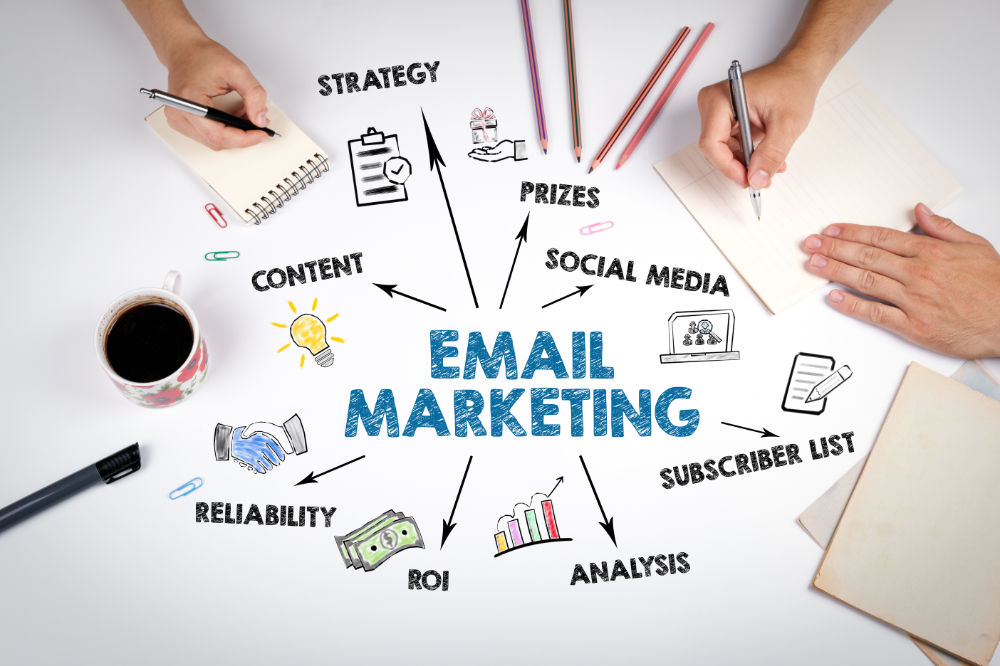
Do you regularly send out email marketing updates to your followers? Although people now communicate frequently on social media, email marketing still remains a very effective way of keeping in touch with customers and increasing website visits and sales. Think about your likely customer needs and desires over the coming months and develop an email marketing strategy accordingly.

Review your email marketing strategy

5. Make sure your site is intuitive and attractive

Your site needs to be intuitive and easy to navigate to keep customers on your site and allow them to make a purchase easily. Your site also needs to be responsive to the device being used to browse it. If visitors have to view a desktop version of your website on a mobile they’ll soon leave! The more pleasant and seamless you make the user experience, the more leads and sales you’ll get.

Functionality is essential, but attractiveness is also vital. From your logo to your text font and the imagery used, your web design should stay within your brand guidelines. All images used in your ecommerce store need to be clear, good quality and aesthetically pleasing. It’s worth spending money getting this right – a poor product image won’t result in many sales.

We hope you’ve found these tips useful. If you would like a Google Ads audit to see whether you could get a better return, or if your business could get a boost from some paid Google advertising, we’re here to help. We offer Google Ads Audits to give you expert help on how to improve your campaigns.

For help with any aspect of digital marketing or SEO, get in touch.
Social Media Trends 2021

Social Media Trends 2021

2020 was a tough year for many businesses. Digital rapidly become the sole channel to communicate with customers as shops closed their doors and face to face engagement reached an all time low. There was a huge spike in social media use as people were looking to social for information, inspiration, humour and to make genuine connections.

So where does this leave businesses in 2021? What are the social media trends this year and how can businesses tap into them to help survive the Covid crisis?

Hootsuite run a global trends survey every year and had responses from over 11,000 organisations across the globe (survey link). Here we look at the trend which most businesses were focused on for 2021 – the race to ROI, and the one which businesses need to bare in mind – silence is golden!

The Race to ROI

Spcial Media Trends 2021 - the race to ROI

With many businesses struggling to re-coop lost sales, it’s no surprise that driving revenue and bringing in new customers is seen as the no. 1 priority for 2021. For businesses, the main focus on social this year is customer acquisition, so watch out, competition online will be fierce!

In contrast, only 23% of marketers are looking to improve the customer experience. Customer experience should not be forgotten in the clamour to make up for lost sales.

How can marketers use social to drive both short and long term ROI in 2021?

With in-person events gone and a more impersonal store experience on the cards for some time, online stores can no longer just be transactional. This might have worked when online was a supplement to instore experiences, but savvy businesses now need to focus on reinventing the online customer experience.

Winning the race to ROI means keeping in mind the short and long term. While acquiring new customers is important, marketeers can’t just rely on bottom of funnel.To differentiate your brand and to build long term ROI, connection, fun and a focus on customer experience is needed!

The smartest marketeers are using social to bridge the gap to a new customer experience. In the world of ecommerce, live streaming has been huge over 2020. It helps to reconnect customers with influencers and guides them through the process rather than leaving them to decide on purchases alone. One business which used this technique to good effect last year was Clarins. They switched to providing expert guidance on Instagram stories to replicate the insights and techniques the customers would have found in store. 

2. Silence is Golden

Social Media Trends 2021 - Silence is Golden

With the seismic shift to online over 2020 a lot of brands have jumped onto social without much thought. At the start of the pandemic, posts abounded with brands saying we’re here for you, which quickly became a saturated message. What messaging will resonate in 2021?

The most important thing to remember is that people primarily want to connect with each other online, not brands. The pandemic has uprooted people’s lives and they don’t want brands interrupting them online with hollow messaging. If your businesses content isn’t interesting, valuable or entertaining it’s likely to miss the mark.

The majority of online content is consumed passively, so don’t design your strategy around engagement since it’s going against most people’s behaviour. You need to give people a reason to engage if you’re asking them to retweet or share something. Smart brands are sitting back and listening and then finding creative ways of fitting into the conversation rather than trying to lead it. Finding funny or entertaining content is one of the top reasons people use social media so don’t shy away from it as marketers. Creativity and fun and light heartedness can help you break through the wall of indifference people have to brands on social media. Focus on video completion rates or link clicks in your metrics rather than vanity metrics (likes, retweets and shares).

How can your brand best find it’s place in the conversation on social?

User generated content is one of the ways to let your audience speak on your behalf. Start by listening to what people are saying about your brand and amplify what’s already being said.

Twitter is the 11th most visited website in the world and you can learn a lot from it. Listen to the conversation and use it to improve customer service and product development. However, it’s not just full of people who engage and interact, there are also people who just use it to passively consume data, such as reading the news.

What platforms are the most effective?

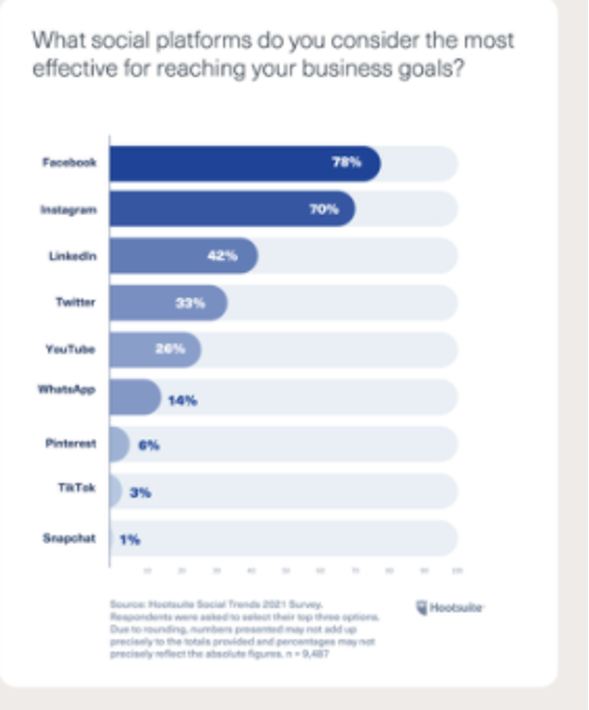
So what platforms are businesses focusing on this year? Facebook still comes out top and is considered the most effective for reaching business goals. This was closely followed by Instagram.

Which Platforms most effective social media 2021

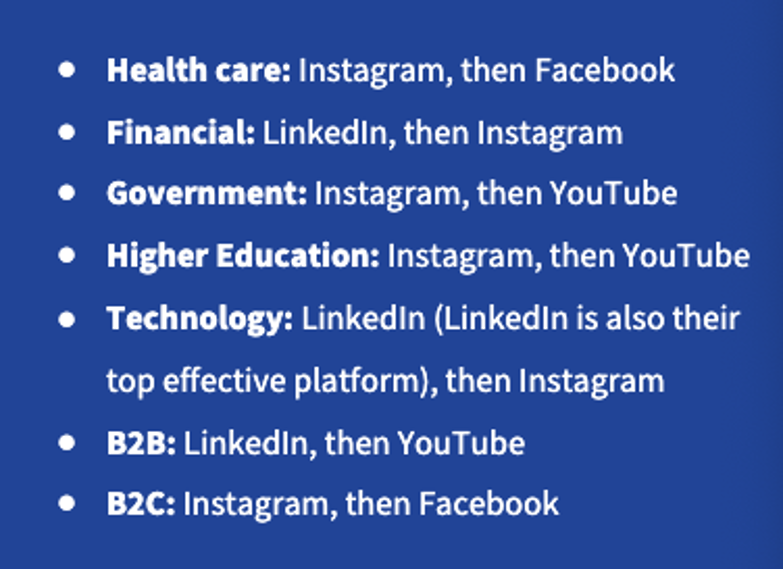
This did vary by industry though. For retail Instagram ranked above Facebook and B2B businesses still prefer LinkedIn.

Social Media Platforms by Industry

For 2021 Instagram came out on top for the platform people wanted to up spend on in 2021, with the new social commerce features proving invaluable.

So one of the main messages for 2021 is when looking to increase spend on social media and digital marketing this year, don’t forget to focus on the customer experience. Whilst customer acquisition is vital for survival over 2021, long term strategy needs to be customer experience.

Are you a bricks and mortar business that wants to move to ecommerce?

Are you a bricks and mortar business that wants to move to ecommerce?

As more people shop online than ever before, you might be wondering how your bricks and mortar retail store can shift to ecommerce. Whether you already have an online store but want to move more of your sales online, or you are starting from scratch, follow our top tips to help you make that shift from bricks and mortar to online effectively.

Create an Online Shop which works!

First off you need an online shop which is performing well. It’s easy to set up an online shop, but you need one which makes it easy for customers to buy. In our experience sites built on WordPress with the Woocommerce plugin and Shopify work really well for ecommerce. We have also worked with B2B ecommerce businesses who use Shopfront from Aspidistra. For more, read our recent blog post How to Improve Your eCommerce Website.

Let Shoppers know you have an Online Store

Do your footfall customers know you have an online store? Although with an ecommerce website you can reach people anywhere, it might be that you have a loyal customer base locally. After you’ve set up your online shop, let your existing customers know about it with signage to your storefront, social media posts and via your email marketing list. If you don’t have an emarketing list, it’s time to set one up so you can let your customers know about your news, latest products and offers!

Let Shoppers know you have an Online Store

Set up Effective Advertising Campaigns

Once your shop is up and running, unless your product is well known and has very little competition (lucky you!), you’ll need to advertise. Google Shopping is great for online retailers. Read our Google Shopping Tips for Online Retailers here.

Social media ads are also very useful to online retailers. They can complement Google Ads by appearing within platforms like Facebook and Instagram to people who may potentially be interested in your product, rather than just to people searching for products like yours. Make sure your targeting, images, ad text, landing pages and location are set up correctly so you don’t waste budget.

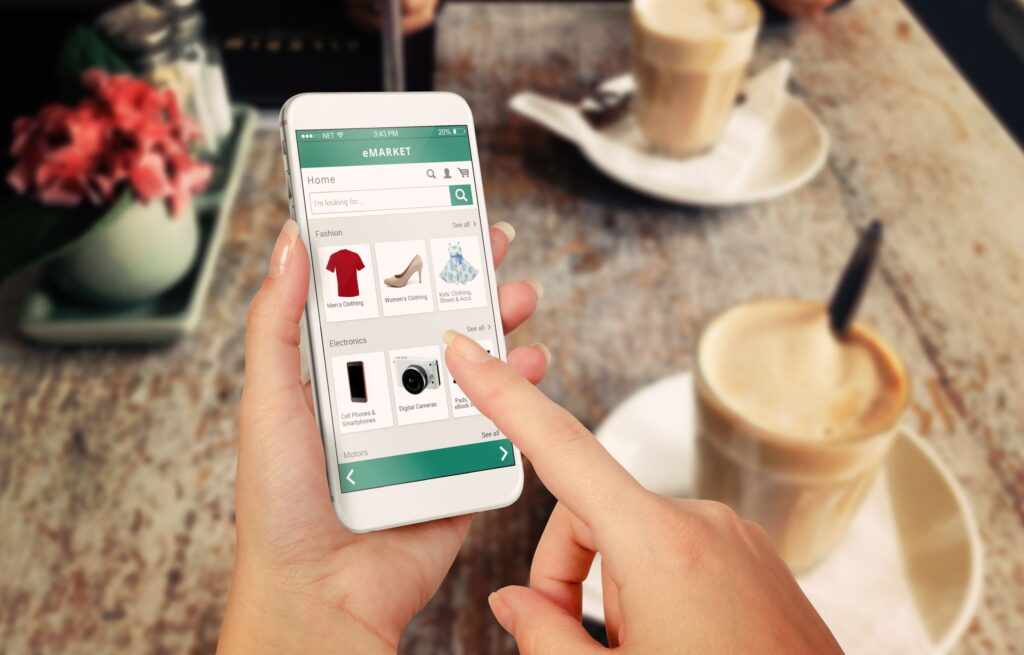
Set up Effective Advertising Campaigns. Digital Marketing

Spend Time Regularly on SEO

If you want to get customers to your website, spending time on search engine optimisation (SEO) is vital. Make sure you’ve done your research on the keywords you want your business to appear for in Google Keyword Planner. Then update your product page titles, descriptions, meta data and image alt tags with relevant keywords. Not only will this help your organic results but also your Google Ad ranking. Read our recent blog post on SEO tips for more on this.  

We hope you found these tips useful. For expert help on Digital Marketing and SEO for retailers in Exeter and across the UK get in touch.

¬¬5 tips on using SEO to thrive in a post covid era

­­5 tips on using SEO to thrive in a post covid era

Have you been tempted to cut costs on search engine optimisation and other digital activities during the current Covid-19 crisis? Whether you feel that demand for your business has surged or dipped, our advice is to keep up your SEO and marketing activities now to help you thrive in the future.

Covid-19 has not only changed the world, but our behaviours and habits too. Demand for online shopping (and online everything!) has increased rapidly and it’s hard to see how demand will return to pre-Covid levels anytime soon. The post-Covid-19 world makes SEO a must-use channel for every small business. Here’s our 5 top tips on how small businesses can use SEO to thrive in a post-Covid era.

1. Do local SEO

People are looking for local products and services more than ever. If your business is not developing an online presence for a specific physical location, you’ll quickly get left behind by your competitors.

This might sound obvious, but make sure you list your business’s contact details on your website and keep them consistent across all online platforms like Facebook or Yell. Create your Google My Business profile for your brand and keep it updated.

2. Identify keywords

What are the keywords which you want your website to appear for? Brainstorm, make a list and check how often these keywords appear on your site. Google wants to show people the most relevant results, so if your website doesn’t contain many, or any, references to your key products or services you’ll appear much lower down the organic results, or worse, not at all!

Make sure you’ve done your research in Google Keyword Planner. Whilst you might think people are searching for “children’s bicycles” and have therefore inserted this phrase lots of times on your website, a quick search in the Keyword Planner will tell you otherwise! The results which come up suggest that the closest popular match for that phrase is “children bicycle” at 880 searches a month, but by far the most popular term is “kids bike” at 33,100 searches a month – that’s the phrase which deserves more focus as a website keyword.

5 tips on using SEO to thrive in a post covid era

3. Create separate product pages

If you want to boost your rankings and revenue you need to create specific pages for each product. It is then much easier to keyword that page and direct people to the product they want. Add meta data containing key information about the product or service you are promoting and mix in some of your relevant keywords as well. Don’t forget to name your images – if the images aren’t named in the alt text field, it doesn’t matter what they show – they won’t be picked up by Google! Well thought out meta data will help to ensure your website appears for your top search terms.

4. Write blog posts

SEO is all about content, so writing blog content regularly and updating your older posts indicates to search engines that your content is fresh, up to date, and relevant.

It’s time-consuming writing content, so make sure some of your posts are centred around evergreen material. This sort of content contains information that users can refer to time and again and will bring you traffic that should increase steadily over time. Don’t forget to refer back to your keyword list when writing blog posts and to add in relevant meta data.

5. Develop a strategy for positive reviews

Did you know reviews are not only great for gaining customer trust, they’re also great for gaining Google’s trust. If your business has high-rated reviews across multiple websites it can amplify your chances of ranking above your competitors.

With this in mind it’s essential to focus on a good strategy for soliciting reviews, for the purposes of building brand affinity and to help with SEO.

¬¬5 tips on using SEO to thrive in a post covid era - strategy for positive reviews

If you are still ignoring SEO for your small business whilst you focus on ‘other areas’ there’s a real danger your competitors will leave you behind. It takes time to work on your SEO and needs to be viewed as an investment, not an expense. We hope these SEO tips help your business thrive in the post-Covid era. For help with SEO advice or support, get in touch.

How to Improve Your eCommerce Website

How to Improve Your eCommerce Website

There’s never been a better time to improve your ecommerce website. With the effects of the coronavirus pandemic unlikely to disappear any time soon, consumers are buying online more than ever before. Whilst it may be that many consumers were pushed into buying online due to the covid-19 lockdown, this change in behaviour is likely to continue long term after the benefits of shopping online have become apparent.

Make sure that your website is giving you the best opportunity to take advantage of this surge in online shopping by following our tips.

1. Make sure you’re on the right platform

Whether you’ve built your web store yourself or paid a web company to build it for you, the question is whether your store is effective. Is it getting you the sales you deserve? If you think your store is underperforming it could mean you have built your ecommerce website using the wrong platform, or your site is under-optimised and clunky.

In our experience sites built on WordPress with the Woocommerce plugin and Shopify work really well for ecommerce. We have also worked with B2B ecommerce businesses who use Shopfront from Aspidistra.

How to Improve Your eCommerce Website - Make sure you’re on the right platform

2. Make sure your site looks good

Functionality is essential, but attractiveness is also vital. From your logo to your text font and the imagery used, your web design should stay within your brand guidelines. All images used in your ecommerce store need to be clear, good quality and aesthetically pleasing. It’s worth spending money getting this right – a poor product image won’t result in many sales.

Images in your ecommerce store need to be clear, good quality and aesthetically pleasing

3. Ensure a great user experience

Making sure your site is intuitive and easy to navigate is essential to keeping  customers on your site and allowing them to make a purchase easily. Your site also needs to be responsive to the device being used to browse it. If visitors have to view a desktop version of your website on a mobile they’ll soon leave! The more pleasant and seamless you make the user experience, the more leads and sales you’ll get.

4. Use well written copy and SEO

It’s not just the navigation and layout which needs to be clear, well written product titles and descriptions are essential on two fronts. Firstly, visitors need to be able to quickly understand what your product is and discover all the information they need to know easily. Secondly, if your website content isn’t thought out in terms of search engine optimization (SEO), the chances are a ready-to-buy customer will miss you altogether!

How to Improve Your eCommerce Website - well written copy and SEO

5. Ensure people know you’re genuine

Unless you’re a business everyone has heard of, it needs to be easy for a potential customer to find out more about you. Have an easy to find About Us page and links to your social media channels. Work hard to get good reviews from previous customers and make them easy to find on your website and social media channels. If you give back to the community in some way or want people to know about something you stand for, make sure you share it prominently. Website visitors need to feel assured you’re a trusted company before they part with their money.

How to Improve Your eCommerce Website - get good reviews

We hope you found these tips useful on how to improve your eCommerce website useful. For help with digital marketing and SEO get in touch.

Website SEO & Digital Marketing Ideas

Website & Digital Marketing Ideas During Coronavirus (Covid 19)

If your business activities are quieter or still on pause due to coronavirus, now might be a good time to work on your website and digital marketing activities. Here are some tips to help you review, update and optimise your current marketing channels.

Improve Organic Reach with Keyword Analysis and SEO

Make your web pages more visible to search engines and help them appear higher up in the organic search results by improving your SEO. Alongside well planned website text, getting meta title & descriptions right is important in getting those all important click-throughs to your website.

Firstly, carry out some keyword analysis. Use Google’s keyword planner to find out which keywords are most relevant to your business and which are searched for the most. You can then use this information to review and update your website content (making sure copy is still readable and flows well) and the meta data fields and alt text on your site. It might be that the keyword analysis has informed you that there could be new pages to introduce too.

For example, if you’re a fitness coach, analysis on keyword planner would show that as well as ‘fitness coach’ the keywords ‘fitness trainer’ and ‘workout coach’ would also be worth including on your website and in meta data. If you need to flex your offering to take account of changing customer behaviour due to coronavirus, you might also decide that the keyword ‘virtual fitness coach’ and similar are worth including if you have the capacity to offer virtual sessions.

Tip: If your website has a lot of pages and you’re not sure where to start, you could check in Analytics for your most visited pages. Head to Behaviour – Site Content – Landing Pages and then All Pages.

Promote key products with Google Ads

If you’re not currently running Google Ads it might be worth considering setting up a campaign to promote your key products or services and increase web visitors and customers. Make sure you pay attention to locations, ad text, keywords and negative keywords. If you’re an ecommerce business not yet on Google Shopping that would be worth considering as well – great for online retailers. If you need help get in touch.

If you’re running Google Ads already, review & update your Ad text and negative keywords and check your settings, keywords, bids and search queries. This will help you get the best ROI for your ad spend.

Tip: It could be worth introducing new Google Ads campaigns which focus on your most searched for products and services, which could have changed due to coronavirus.

If you would like a Google Ads audit to see whether you could get a better return, or if your business could get a boost from some paid Google advertising, we’re here to help. We offer Google Ads Audits to give you expert help on how to improve your campaigns. Many campaigns we see aren’t optimised to their full potential and we’ve helped many clients save money and improve their reach and sales.

Review Social Media Ads

Social media ads are useful to businesses in a number of ways. Unlike Google Ads, which appear in the search engine if someone searches for keywords relating to the ad, social media ads show to people who may potentially be interested in your product or service.

For example, an accountant may have Google Ads running which appear when someone in their target area searches for ‘accountant’. They may then complement these ads and increase exposure for their business by setting up Facebook Ads which appear to people in their local area who are small business owners who might be interested in an accountant.

If you already have social media ads set up, now could be a good time to review and update them. Make sure images, ad text, landing pages and location targeting is reviewed to make sure it’s relevant to the current situation and customer needs.

Review your email marketing strategy

Do you regularly send out email marketing updates to your followers? Although people now communicate frequently on social media, email marketing still remains a very effective way of keeping in touch with customers, increasing website visits and making sales. The chances are, your customer needs have changed dramatically due to coronavirus and you might need to flex your offering accordingly. Think about your likely customer needs and desires over the coming months and develop an email marketing strategy accordingly.

We hope you’ve found these tips useful. For help with any aspect of digital marketing or SEO, get in touch.